
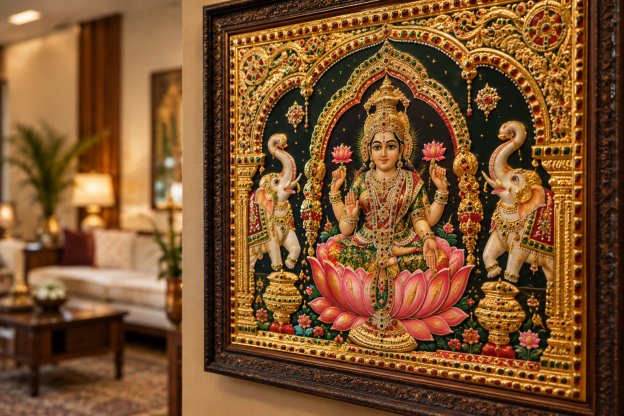
How to Choose the Right Tanjore Painting for Home Decor
Decorating a home is not only about choosing furniture, colours, and lighting. The right artwork can add personality, cultural character, and visual interest to a space. Tanjore Painting for Home Decor is a beautiful choice for homeowners who appreciate traditional Indian art and handcrafted details.
Known for rich colours, detailed designs, raised artwork, and gold foil work, Tanjore paintings can complement both traditional and modern interiors. However, choosing the right painting requires some thought. The size, theme, placement, colours, and overall interior style should work together to create a balanced look.
Why Choose Tanjore Painting for Home Decor?
Tanjore paintings have a distinctive appearance that can make them a focal point in a room. Their decorative details and traditional themes give walls a strong artistic presence without requiring additional decoration.
These paintings can be used in different areas of a home, including living rooms, pooja rooms, bedrooms, entrances, and study spaces. A carefully selected artwork can also complement wooden furniture, traditional décor, or even a contemporary interior.
For homeowners who value Indian artistic traditions, Tanjore art offers more than decoration. It represents a form of South Indian craftsmanship that can bring cultural character into everyday living spaces.
How to Choose the Right Tanjore Painting
Choosing artwork should begin with the room where you plan to display it. Think about the available wall space, existing furniture, lighting, and colours before selecting a painting.
Consider the Room
A large Tanjore painting can work well as a centrepiece in a spacious living room. For a smaller wall, a compact artwork may create a more balanced appearance.
For a pooja room, devotional subjects such as Lord Ganesha, Lord Krishna, Goddess Lakshmi, or other traditional themes may complement the purpose of the space.
An entrance or foyer can also be a suitable location for a traditional artwork, while smaller paintings can work well in bedrooms, offices, or study areas.
Select the Right Size
The size of the painting should match the wall and surrounding furniture. A very small painting may look lost on a large wall, while an oversized piece can make a smaller room feel crowded.
Before purchasing, measure the available wall area and consider the position of sofas, tables, shelves, and other decorative elements. Leaving enough surrounding space can help the artwork stand out.
Match Your Interior Style
Tanjore paintings can complement different interior styles when the artwork is selected carefully.
In a traditional home, a detailed painting can pair naturally with wooden furniture, brass décor, and classic architectural elements.
In a modern home, one carefully positioned Tanjore painting can create contrast against neutral walls and simple furniture. Instead of filling the wall with multiple decorations, a single statement piece can provide visual interest.
Popular Themes for Tanjore Paintings
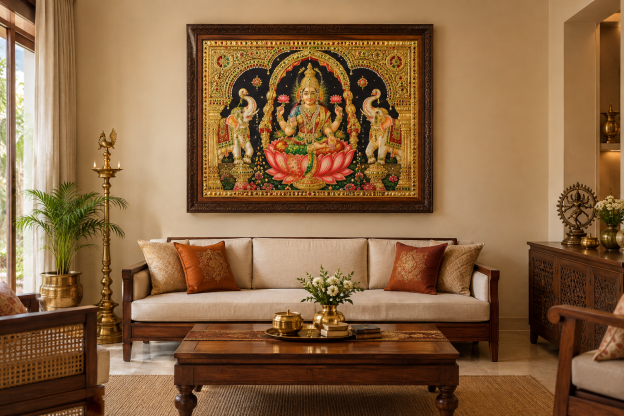
Tanjore paintings are widely associated with devotional and traditional subjects. Popular choices include Lord Ganesha, Lord Krishna, Radha Krishna, Goddess Lakshmi, Lord Balaji, Goddess Saraswati, and Lord Shiva.
When choosing a theme, consider the purpose of the room and your personal preferences. A painting should feel meaningful to you while also complementing the surrounding décor.
For a family living space, you may prefer a theme that reflects your artistic taste and cultural interests. For a pooja room, devotional artwork may create a more appropriate atmosphere.
What Makes Tanjore Paintings Unique?
One of the defining characteristics of Tanjore art is its detailed decorative finish. Traditional works often feature raised or embossed elements, rich colours, ornamental details, and gold foil work.
The combination of painting and relief-style detailing gives the artwork a distinctive three-dimensional appearance. Decorative stones and other embellishments may also be used to enhance specific areas of the composition.
The craftsmanship involved makes each piece more than a simple wall decoration. It connects the artwork with the traditional artistic heritage of Tamil Nadu.
Tips for Displaying Tanjore Wall Art
Proper placement can make a significant difference to how a painting looks in your home. Choose a wall where the artwork can be viewed comfortably without being hidden by furniture or other decorations.
Good lighting can also highlight the painting's colours, raised details, and gold elements. Avoid placing artwork where unsuitable heat, moisture, or direct environmental exposure could affect its condition.
If the painting is the main feature of the wall, keep the surrounding décor relatively simple. This allows the artwork to remain the visual focus.
Final Thoughts
Choosing Tanjore Painting for Home Decor is about finding the right balance between artwork, room size, personal taste, and interior style. Whether you want to decorate a living room, pooja room, entrance, or another space, a thoughtfully selected Tanjore painting can add traditional character and artistic appeal.
Explore the collection at Tanjore Art Gallery to discover traditional artworks that can complement your home's style and reflect your appreciation for Indian craftsmanship.